How to Start a Business in Qatar in 2026: A Complete Step-by-Step Guide
Setting up your own business in Qatar is among the most beneficial decisions you could take in 2026. The country is expanding rapidly, the economy is steady, and the government is active in helping foreigners and locals set up and run businesses in Qatar.
But let’s be transparent with you: it’s not as straightforward as simply creating a name and opening an account at a bank. There are legal frameworks to select from, government approvals to seek and documents to create, as well as ongoing obligations to comply with. If you don’t have an organized plan, you’ll hit a wall fast.
This is why we drafted this guide. Here at TBC QA , we’ve helped hundreds of companies and entrepreneurs to establish businesses successfully in Qatar. We’ve seen the most common errors, we’ve identified the best practices that are secure, and we know the steps people don’t think about. This is the manual we wish all clients had read prior to making the decision to visit us.
Let’s go through the entire process from beginning to the very end.
Why Qatar Is Still One of the Best Places to Start a Business in 2026
Before getting into the process, take time to consider the reasons Qatar continues to draw entrepreneurs and investors from all over the globe.
Qatar is among the countries with the top GDP per capita numbers in the world. The economy isn’t solely dependent on gas and oil now — the nation has been actively expanding into technology, tourism, as well as logistics, financial services, healthcare, and education. Qatar National Vision 2030 drives this shift, and the business climate is designed to accommodate the process.
For investors from outside the country, one of the most significant changes in the last few years is the increase in 100 percent overseas ownership rights. In many industries, it is no longer necessary to have a Qatari partner to start and run an enterprise. This alone is an exciting development for international entrepreneurs who were previously stymied by the local requirements for sponsorship.
Include an average corporate tax rate that is 10% for all firms, and no individual income taxes, world-class infrastructure, an ideal location that connects Europe, Asia, and Africa, as well as an educated and diverse population -and you begin to see the reason Qatar continues to be one of the top desirable places to do business within the region.
Step 1: Decide What Type of Business You Want to Set Up
The first thing to determine is the legal framework of your company. This isn’t a trivial issue — it will affect the rights you have as a proprietor, your liability, capital requirements, and the licensing platform you should make use of.
These are some of the popular corporate structures that are used in Qatar:
Limited Liability Company (LLC): This is the most well-known structure for companies that operate in Qatar’s main market. LLCs are 100% foreign-owned in a variety of areas, as per the latest investment law. It must have at least two shareholders and a clearly defined share capital. This is the most popular structure for a majority of SMEs and medium-sized companies.
Single Person Company (SPC) Like the name implies, it allows one person to control a business completely. It’s a great alternative for solo entrepreneurs as well as consultants who need the security of a restricted liability company without the need for multiple shareholders.
Branch of a Foreign Company: If you already have a reputable company abroad and would like to expand your business into Qatar, you are able to register an affiliate. The parent company is completely responsible for the branch’s operations.
Qatar Free Zone Company: In the event that your company is focused on exports as well as international business, establishing at one of Qatar’s free zones could be the best option. Free zone companies have the benefit of 100% foreign ownership, complete profits repatriation and are exempt from export and import duties.
Qatar Financial Centre (QFC) Entity: The QFC is specifically designed for professional services, as well as business companies. It operates within its own regulatory and legal structure and is especially attractive for asset management, insurance and advisory firms.
Choosing the wrong structure is among the most costly and expensive mistakes that new business owners make. Make sure you understand the difference and, if you’re not sure, seek professional advice before making a decision.
Step 2: Choose Your Licensing Platform
Once you have figured out the structure of your business, you must determine the licensing authority or platform you’ll be registering with. Qatar has several platforms, and each one caters to various types of companies.
Ministry of Commerce and Industry (MOCI): This is the main licensing authority for all mainland companies. The majority of businesses operating in Qatar, including retail and hospitality, construction, as well as healthcare, are licensed by MOCI. MOCI can obtain the commercial authorization (CR).
Qatar Free Zones Authority (QFZA): QFZA oversees the free zones in Qatar that include Ras Bufontas near Hamad International Airport and Umm Alhoul near Hamad Port. These are great for manufacturing, logistics, and technologies, as well as companies that sell consumer goods.
Qatar Financial Centre (QFC): The QFC is an entirely separate regulatory environment designed for professional and financial services. The QFC has their own laws, courts and regulatory bodies that make it an ideal choice for international companies who want familiar legal structures.
Media City Qatar: If your company is involved in media or content creation, broadcasting, advertising, or any other part of the creative industry, Media City Qatar offers an environment specifically designed for you with licences as well as infrastructure.
The platform you choose will determine the rules that you must follow and the charges you have to pay, as well as the kinds of activities you’re allowed to engage in. It’s not a universal choice.
Step 3: Reserve Your Trade Name
Before you can officially begin, you must make sure you have a trademark registered for your company. This can be done via MOCI’s website (Sijilat) as well, in the case of the free zone, as well as QFC entities, by using the appropriate authority’s platform.
The name you choose to use for your business must not be identical or similar to a registered business. It must be in accordance with Qatar’s name conventions, such as names that refer to government entities; religious or government entities; or international protected brands are not allowed.
When your trade name is accepted, you’ll have an enumeration period of time to move forward in registering your name. Don’t put this off because delay at this point could result in a new process being initiated.
Step 4: Prepare Your Documents
This is where people often underestimate the time and effort required. The registration process for government officials in Qatar requires documents that need to be carefully made, translated if required, and in certain instances, attested.
The most common documents needed are:
Passport copies of directors and shareholders along with an application form that is completed along with the Memorandum of Association (MOA) or Articles of Association (AOA) that has been drafted and signed by a notary with proof of having an address for business registered in Qatar Initial acceptance from any pertinent authority in the sector (for instance for example, the Ministry of Public Health for health-related companies and the Ministry of Education for training centers) or, in some cases, a certificate of no-objection from the authority responsible.
For shareholders from abroad, the documents you receive from overseas typically require certification, notarization, and attestation through your Ministry of Foreign Affairs in your home country; after that, re-testing and attestation by the Qatar Ministry of Foreign Affairs in Doha. This alone could take a few weeks in the event that you’re not properly prepared.
This is one of the areas where a professional PRO service provider such as TBC QA genuinely saves you much time and stress. We understand exactly what each authority needs and ensure that your documentation is in the correct form before they’re ever sent.
Step 5: Submit Your Application and Obtain Initial Approvals
When your documents are completed Once you have them, you can make your application available through the appropriate licensing platform. To submit MOCI Registrations, the process is performed through the Sijilat system. In the case of QFC as well as free zone companies, registration is made via their portals.
Based on the nature of your business depending on your business, you might require approval from one or more of the government bodies prior to your commercial registration being completed. For instance, a food and beverage company requires approval by MOCI and the Ministry of Public Health. A construction business requires the approval of MOCI. Any company that plans to sponsor employees requires permission from the Ministry of Labour. Ministry of Labour.
The approvals may be concurrent in certain instances; however, they do delay your overall registration timetable. In general, from the time you prepare your document to getting the commercial registration certificate, the process can take anywhere from 2 to 6 weeks; at times, it can take longer in the event of issues or other approvals needed.
Step 6: Open a Corporate Bank Account
Once your commercial registration has been granted, you are able to open a bank account for your company. Qatar has several well-known international and local banks, which include Qatar National Bank (QNB), Commercial Bank, Doha Bank, HSBC Qatar, and many more.
Every bank will have its specific set of requirements; however, you’ll generally need a commercial registration document as well as the MOA or AOA passports of the signatories you have authorized, as well as evidence of your business address. Some banks might also ask for the business plan and other documents, based on what your company’s nature is.
The process of opening a corporate account could be anywhere from a couple of days to several weeks, depending on the bank you choose to use and how complex your company structure is.
Step 7: Register for Tax and Compliance Obligations
Qatar implemented the corporate income tax framework that is applicable to all firms at a rate of 10 percent on net profits. Although businesses owned by Qatari or GCC citizens are exempt from tax, foreign-owned companies are subject to the tax.
You’ll need to sign up with your local General Tax Authority (GTA) to file tax returns each year and ensure that your accounting documents are in compliance with Qatari guidelines. If your company exceeds certain revenue thresholds, other compliance requirements could be in place.
In the case of employment, you must sign up at your Ministry of Labour and comply with the Wage Protection System (WPS) at the time you make your first hire. Failure to comply with WPS is considered a serious offense in Qatar and can lead to penalties, suspension of business and restrictions on future hiring.
Step 8: Set Up Your PRO Services
This process is often viewed as a flimsy thought — which is an error. When your business is registered and you begin to hire employees, you will be faced with ongoing government transactions to take care of. Visa requests, QID renewals, labor contract registrations, renewals of commercial licenses and document attestations -the list is endless.
Having a trusted PRO service provider from the beginning ensures the transactions are handled efficiently and on time, without removing your HR staff from their more strategic tasks.
We at TBC Quality Assurance assist companies from the initial beginning of the setup process to ensure there’s never a breach in the coverage of compliance. We take care of everything from the initial paperwork for company formation through ongoing government transactions all year round.
Common Mistakes First-Time Business Owners Make in Qatar
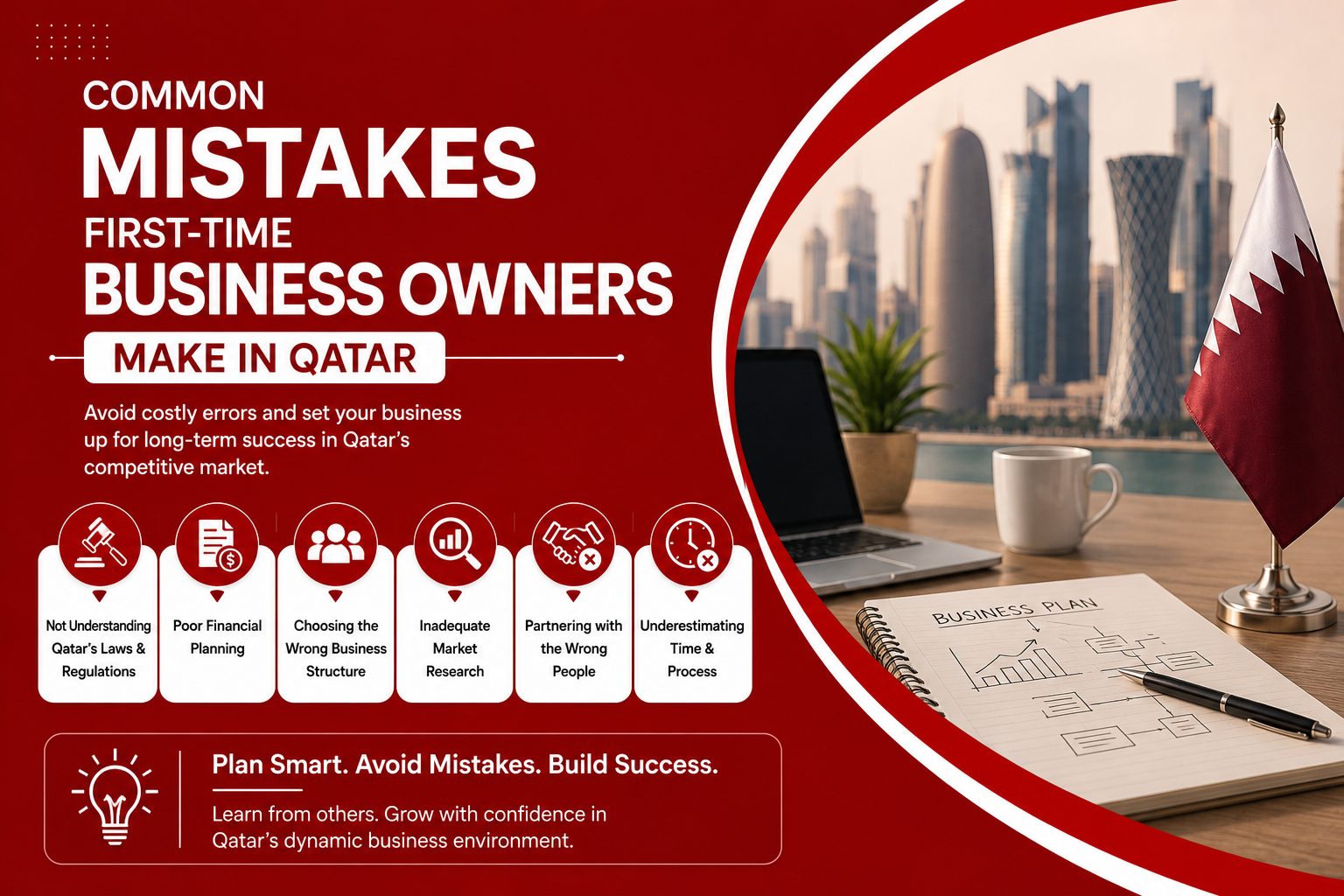
We have helped many companies establish themselves here; we are seeing the same mistakes pop up:
Making the wrong choice in terms of business structure because it appeared easier or less costly initially. Inadequately estimating the time it takes to obtain attestation documents, particularly when documents originate from overseas. Trying to deal with government transactions with no professional assistance and having submissions rejected due to incomplete or inaccurate details. The company classification is not completed before determining they can’t take part in government contract bids. Employees are hired before WPS registration is completed, which can lead to problems with compliance.
Each one of them is preventable with the proper direction.
How TBC QA Makes Starting a Business in Qatar Simpler
We don’t just assist with completing forms. In TBC QA, we help you through each stage of the process – from helping you select the best business structure to the preparation and submission of the registration documents, and finally managing all of your regular PRO and government communications requirements.
We have been working with startups, SMEs and established international corporations across many sectors. We are aware of the things that work; our team knows what you need to look at, and we’re at your side throughout the process.
The idea of starting your own business in Qatar is a thrilling opportunity for 2026. If you have the right people to help you get started, it doesn’t require a lot of effort.
Conclusion
Starting a business in Qatar is absolutely doable in 2026—and honestly, it’s one of the smartest moves you can make if you’re serious about growth in the Gulf region. The country’s economy is booming, the government is actively welcoming foreign entrepreneurs, and the infrastructure is world-class. You’ve got 100% foreign ownership in most sectors now, competitive tax rates, and a stable market. That’s rare.
But here’s the real talk: the process isn’t a shortcut. It requires patience, attention to detail, and—most importantly—knowing exactly what each government body wants from you. One missing stamp on a document or one missed deadline, and you’re back to square one. We’ve seen it happen too many times.
The eight steps we’ve walked you through aren’t just bureaucratic boxes to tick. They’re the roadmap that separates businesses that launch smoothly from those that hit obstacles and waste months (and money) trying to figure out what went wrong.
The good news? You don’t have to figure this out alone. Whether you’re a solo entrepreneur or managing a team at an international corporation, having a PRO service partner who knows Qatar’s system inside and out saves you time, stress, and money. It’s the difference between spending 6 weeks wrestling with attestations and having it done right the first time.
If you’re ready to start, we’re ready to guide you. TBC QA has walked hundreds of businesses through this exact process. We know the shortcuts (the legal ones), we know which authorities move fast and which ones need extra documentation, and we know how to keep your business compliant once you’re up and running.
Don’t let uncertainty hold you back. Your business opportunity in Qatar is waiting. Let’s make it happen the right way.
Frequently Asked Questions
How long does it actually take to set up a business in Qatar?
From document preparation to getting your commercial registration certificate, you’re looking at 2 to 6 weeks—sometimes longer if you need sector-specific approvals or if documents are coming from overseas and require attestation. The biggest variable is how quickly you can get all your paperwork in order and how responsive the relevant authorities are at that moment. With a PRO service handling it, you’ll avoid delays caused by incomplete or incorrectly formatted submissions.
Do I really need a PRO service, or can I do this myself?
Technically, you can do it yourself—but here’s what we see happen: entrepreneurs spend 100+ hours learning the system, make mistakes on document formatting that cause rejections, and end up frustrated. A PRO service costs less than the time and frustration you’ll save. Plus, government officials know exactly what they want; a PRO service speaks their language.
What if I’m not a Qatari citizen? Can I still own 100% of my business?
Yes—in most sectors. Qatar’s investment laws now allow 100% foreign ownership in many industries including technology, hospitality, consulting, and logistics. Some sectors (like oil and gas, media, certain financial services) still have restrictions. This is why choosing the right business structure and licensing platform from the start is so important.
Is the 10% corporate income tax mandatory for all businesses?
Foreign-owned businesses pay 10% corporate income tax on net profits. Qatari and GCC citizen-owned businesses are currently exempt. This is a major consideration when planning your business structure and projections. Your PRO service or accountant can help you understand the tax implications for your specific situation.
What happens if I hire employees before registering with the Ministry of Labour?
Don’t. This is one of the most common mistakes, and it’s serious. Qatar’s Wage Protection System (WPS) is non-negotiable. Hiring without WPS registration can result in fines, business suspension, and restrictions on future hiring. Register first, hire second.
Can I register my business name today and start the rest of the process later?
You can, but there’s a time limit. Once your name is reserved, you have a limited window to complete your registration. Don’t sit on it—keep momentum going. Starting and stopping means redoing steps and potentially losing your name reservation.
Do I need separate PRO representation after my business is registered?
Yes. The paperwork doesn’t end at registration. Visa sponsorships, QID renewals, labor contract registrations, license renewals, and government attestations happen constantly throughout the year. Having an ongoing PRO service ensures nothing slips through the cracks.
Which business structure should I choose—LLC, SPC, or Free Zone?
That depends on several factors: number of owners, industry, expected revenue, whether you plan to sponsor employees, and whether you need to repatriate profits. An LLC is the most common for mainland businesses. An SPC is perfect for solo entrepreneurs. Free zones are ideal if you’re focused on exports. QFC is best for financial and professional services. We recommend discussing this with a professional advisor (like us) before deciding.
What if documents from my home country need to be attested?
They’ll need to go through your country’s Ministry of Foreign Affairs, then re-attested by Qatar’s Ministry of Foreign Affairs once they’re in Doha. This process can take several weeks, so plan ahead. Start gathering documents early.
Can I operate from a home office, or do I need a physical office space?
You need a registered business address in Qatar. This doesn’t have to be a full office—it can be a co-working space, a serviced office, or a small rented space. Many entrepreneurs use shared office solutions in Doha. You can’t operate from your residential home address for official business registration.
What’s the difference between MOCI, QFZA, QFC, and Media City—and which should I choose?
MOCI is for general mainland businesses (retail, consulting, hospitality, healthcare). QFZA is for manufacturing, logistics, and export-focused businesses. QFC is for financial and professional services with international standards. Media City is specifically for media, advertising, broadcasting, and creative industries. Your business type determines where you register.
How much capital do I need to start a business in Qatar?
This varies by business structure and platform. An LLC typically requires minimum share capital (which varies), while an SPC may have different requirements. Free zones and QFC entities have their own thresholds. There’s no universal “minimum,” so you’ll need to confirm based on your chosen structure and sector.
I’ve heard Qatar is expensive. Is it worth starting a business here?
Qatar has high operational costs (office space, recruitment, services), but the advantages often outweigh this: no personal income tax, 100% foreign ownership in most sectors, strategic location between Europe and Asia, world-class infrastructure, stable economy, and access to the Gulf market. The ROI depends on your business model, but thousands of companies find it worth it.