Qatar Dairy Import Regulations 2026: Everything Importers Need to Know
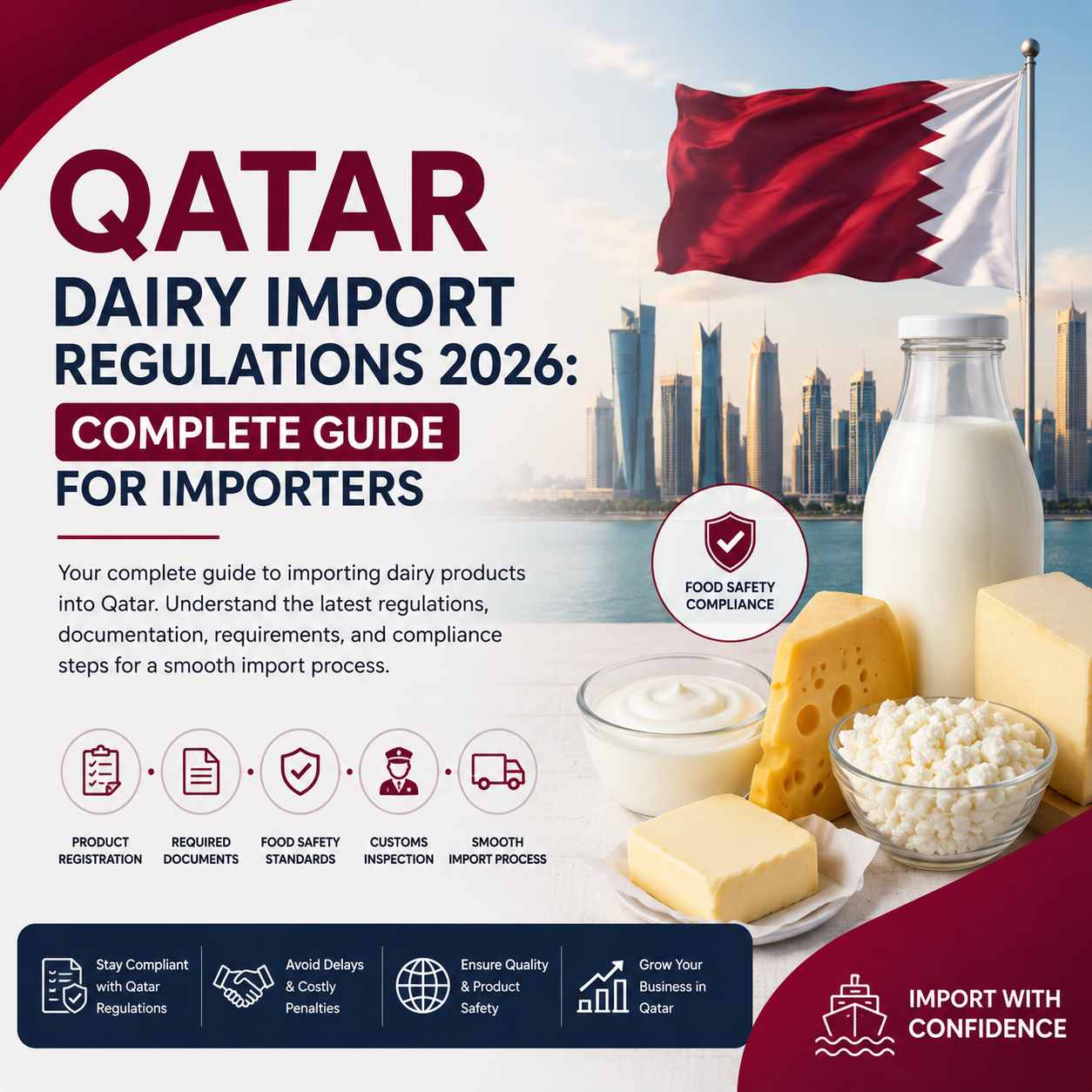
Qatar continues to strengthen its food safety standards to ensure consumers receive high-quality dairy products. Businesses planning to import milk, cheese, butter, yoghurt, and other dairy products into Qatar must comply with the latest regulations issued by the Ministry of Public Health (MoPH) and Qatar Customs.
Understanding these requirements before importing can help businesses avoid shipment delays, additional inspection costs, or customs rejection.
Why Qatar Has Strict Dairy Import Regulations
Food safety remains one of Qatar’s top priorities. Since dairy products are highly regulated, authorities require importers to meet strict health, quality, and documentation standards before products are released into the local market.
The regulations are designed to:
- Protect consumer health
- Ensure imported dairy products meet international quality standards
- Verify product origin and traceability
- Prevent the import of unsafe or expired food products
These requirements align with Qatar’s broader food import framework and dairy-specific import controls.
Dairy Products Covered
The regulations generally apply to:
- UHT Milk
- Fresh Milk
- Cheese
- Butter
- Cream
- Yoghurt
- Milk Powder
- Dairy Spreads
- Other processed dairy products
Many dairy categories are subject to Ministry of Public Health inspection before customs clearance.
Key Requirements for Importing Dairy Products into Qatar
1. Product Registration
Before importing, food products typically need to be registered through the Ministry of Public Health’s food registration system. Importers must submit product information, labels, ingredient details, and supporting documents for approval.
2. Import Documentation
Depending on the product, importers may need documents such as:
- Commercial Invoice
- Packing List
- Certificate of Origin
- Health Certificate
- Product Labels
- Product Registration Documents
- Customs Declaration
Authorities may request additional supporting documentation during inspection.
3. Food Safety Compliance
Imported dairy products must comply with Qatar’s food safety standards regarding:
- Ingredients
- Shelf life
- Packaging
- Storage conditions
- Product quality
Certain dairy products are also subject to specific shelf-life requirements.
4. Product Labelling
Labels should accurately display product information, including ingredients, expiry date, manufacturer details, country of origin, storage instructions, and other mandatory information required by Qatar’s food regulations. Recent guidance also highlights stricter labelling and traceability expectations.
5. Customs Inspection
When shipments arrive in Qatar, customs and food safety authorities may inspect the goods before granting clearance.
The inspection process may include:
- Document verification
- Physical inspection
- Sampling
- Laboratory testing (if required)
Failure to comply may delay or prevent customs clearance.
Common Challenges Importers Face
Many businesses experience delays because of:
- Missing documents
- Incorrect product registration
- Labelling errors
- Incomplete customs paperwork
- Non-compliance with food safety requirements
Proper preparation before shipment can significantly reduce these risks.
How TBC Business Consultancy Can Help
At TBC Business Consultancy, we assist businesses with navigating Qatar’s import procedures and regulatory requirements. Our team can support companies by:
- Assisting with company setup for import businesses
- Advising on import compliance requirements
- Coordinating documentation
- Supporting food product registration processes
- Helping businesses communicate with the relevant authorities
- Providing guidance throughout the customs clearance process
Whether you are importing dairy products for the first time or expanding your food business in Qatar, our experienced consultants can help simplify the process.
Final Thoughts
Importing dairy products into Qatar requires careful planning and compliance with the country’s food safety and customs regulations. Businesses that understand the registration process, prepare the correct documentation, and meet product requirements are more likely to experience smooth customs clearance.
Working with experienced business consultants can help minimise delays and ensure your imports comply with the latest regulatory requirements.

Leave A Comment