QFZ Company Formation in Qatar: A Practical Guide for Investors
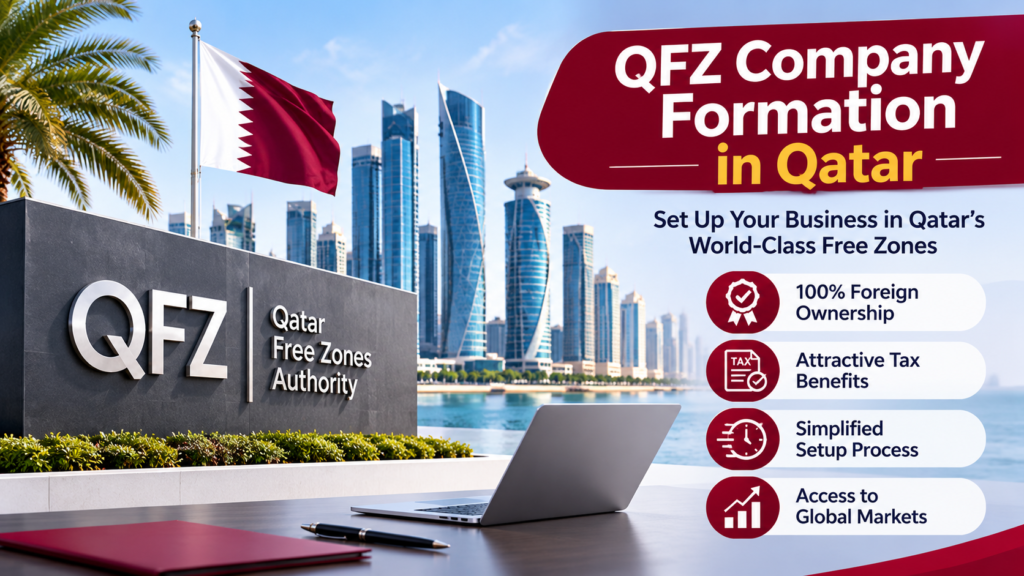
Qatar Free Zones (QFZ) are designed for businesses that want to operate with fewer restrictions on ownership and import-export activity. Foreign founders often hear about QFZ but struggle to find a clear explanation of how company formation works and whether it suits their business.
This guide covers what QFZ is, the benefits, the setup process, and when mainland or another option may be the better choice.
What Is the Qatar Free Zones Authority (QFZA)?
QFZ refers to the free zones managed by the Qatar Free Zones Authority. The two main locations are:
- Ras Bufontas Free Zone: near Hamad International Airport, suited to logistics, trading, light manufacturing, and technology
- Umm Alhoul Free Zone: near Hamad Port, suited to manufacturing, heavy industry, and port-linked logistics
QFZ is separate from the Qatar Financial Centre (QFC), which serves financial and professional services firms, and from Qatar Science & Technology Park (QSTP), which focuses on research and innovation.
Key Benefits of QFZ Company Formation
Benefits commonly associated with QFZ include:
- 100% foreign ownership of the company
- Tax incentives, which may include exemptions for a defined period, subject to current rules
- Customs advantages on goods imported for use within the zone
- Full repatriation of profits and capital, subject to applicable rules
- Modern infrastructure with warehousing, logistics, and utilities
- Proximity to the airport and port, which reduces logistics time and cost
- Streamlined licensing through a dedicated authority
Incentive terms and eligibility can change, so confirm current conditions with QFZA before making financial decisions.
Who Is QFZ Best For?
QFZ typically suits businesses in:
- Logistics, warehousing, and distribution
- Light and heavy manufacturing
- Food and agri-processing
- Technology, e-commerce fulfilment, and data-related activity
- Re-export and international trading
- Industrial and engineering services
It is usually not the best fit if your customers are mainly inside Qatar’s local market, since selling from the zone to the mainland involves extra requirements and costs.
QFZ vs. Mainland vs. QFC
QFZ | Mainland | QFC | |
Foreign ownership | 100% | 100% in many activities, depending on rules | 100% |
Best for | Logistics, manufacturing, trading for export | Local market sales, contracts, retail | Financial and professional services |
Selling to local market | Possible, with extra requirements | Direct | Limited to licensed activities |
Regulator | QFZA | MOCI | QFC Authority |
The right choice depends on where your customers are. If most revenue comes from Qatar’s domestic market, mainland is often simpler. If you serve regional or international customers, or run operations that need port and airport access, QFZ is worth serious consideration.
QFZ Company Formation Process
The exact steps depend on your activity and QFZA’s current procedures, but the general path is:
- Choose your activity and zone.
Decide which activity you’ll carry out and whether Ras Bufontas or Umm Alhoul fits it better. - Select a legal structure.
Common options include a free zone company and a branch of an existing foreign company. - Submit your application.
Provide company details, shareholder information, business plan or activity description, and required identification. - Receive approval and sign agreements.
After review, you sign the relevant registration documents and lease or facility agreements. - Secure premises.
Depending on your business, this could be an office, warehouse, or industrial plot within the zone. - Obtain your license and registration.
Once fees and documents are completed, your license is issued. - Complete setup.
This usually includes bank account opening, staff visas, and any sector-specific permits.
Documents Commonly Required
Requirements vary, but expect to prepare:
- Passport copies and personal details of shareholders and directors
- Company profile or business plan
- Corporate documents if a foreign company is a shareholder (certificate of incorporation, articles, board resolution)
- Attestation or legalisation of foreign documents
- Proof of address and contact details
- Activity-specific licenses or approvals
Foreign documents often need attestation, which is a common cause of delay. Start early.
Costs to Budget For
Costs depend on your activity, space, and staffing. Plan for:
- Registration and license fees
- Office, warehouse, or plot lease and deposits
- Fit-out or equipment
- Visa and immigration costs
- Bank account and compliance costs
- Professional or PRO service fees
- Working capital for the first few months
Ask for a written fee schedule and confirm what is included. Hidden extras are the main reason startup budgets overrun.
Common Mistakes to Avoid
Choosing QFZ without checking your sales model. If you depend on local customers, mainland may serve you better.
Assuming incentives are automatic. Tax and customs benefits depend on activity and eligibility.
Underestimating document attestation time. This can add weeks.
Ignoring ongoing compliance. License renewals, visas, and reporting continue after setup.
Picking the wrong activity description. Your license activity should match what you actually do.
Frequently Asked Questions
Can foreigners own 100% of a QFZ company?
Yes, free zone companies generally allow full foreign ownership, subject to QFZA rules.
Can a QFZ company sell in the Qatari market?
It is possible, but additional requirements and costs usually apply. Plan this before choosing a free zone.
What is the difference between QFZ and QFC?
QFZ serves logistics, manufacturing, and trading businesses. QFC serves financial and professional services firms.
How long does QFZ company formation take?
Timelines vary by activity, documents, and premises. Prepared applicants move faster.
Do I need a physical premises in QFZ?
Typically yes, as the license is tied to a facility within the zone. Confirm the current requirements.
Is QFZ cheaper than mainland?
Not always. Savings on customs and taxes can offset costs, but lease and setup expenses vary.
Final Thoughts
QFZ can be a strong option for businesses focused on logistics, manufacturing, and international trade. The key is matching the zone to your real business model, not just the headline benefits.
At TBC Business Consultants, we help investors compare QFZ, mainland, and other options, prepare documents, and handle the setup and compliance steps that follow. If you’d like an honest view of which structure fits your plan, we’re happy to talk it through.



Leave A Comment