Labour Law Compliance in Qatar: A Practical Guide for Employers
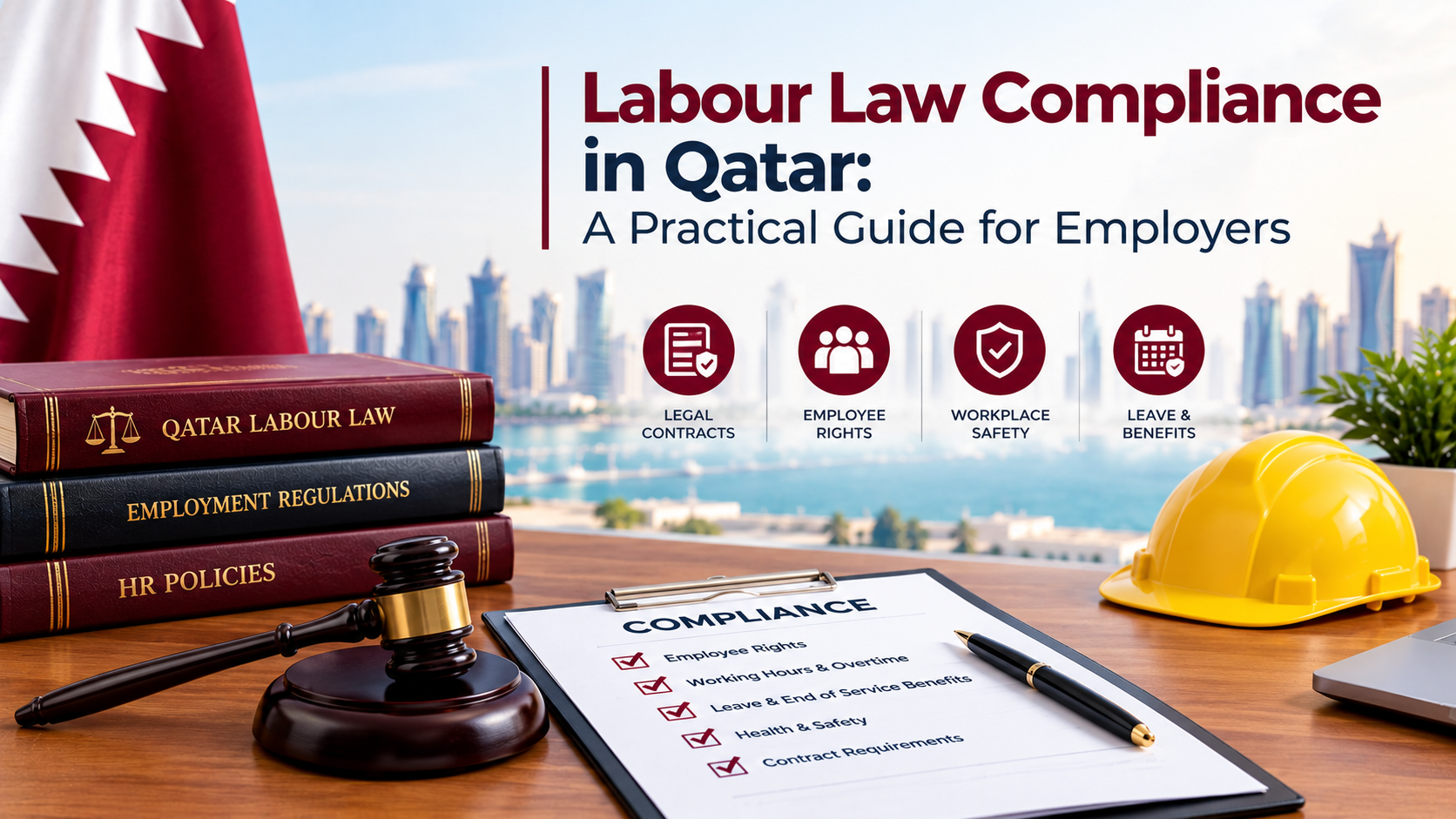
Hiring people in Qatar brings responsibilities that go beyond paying a salary. Contracts, working hours, leave, end-of-service benefits and wage payments are all regulated. Mistakes here can lead to fines, disputes and blocked government services.
This guide explains labour law compliance in Qatar in plain language. You will see the main rules employers must follow, a monthly and yearly checklist and the mistakes we see most often.
Qatar’s labour rules have been updated several times in recent years. We point you to the official source wherever details matter, so please confirm the current position before acting.
What Is Labour Law Compliance in Qatar?
It means following the laws that govern the relationship between your company and your employees. The main framework is Qatar’s Labour Law (Law No. 14 of 2004) and its later amendments, along with ministerial decisions and related regulations.
For most private-sector companies, compliance covers:
- Employment contracts
- Wages and the Wage Protection System (WPS)
- Working hours and overtime
- Leave and public holidays
- End-of-service benefits
- Termination and notice
- Health, safety and accommodation
- Visas, residence permits and Qatar IDs
Who Does the Labour Law Apply To?
The Labour Law generally applies to employees in the private sector. Some groups, such as government employees, domestic workers and certain other categories, are covered by different laws. If you are unsure which rules apply to a particular worker, check before you finalise the contract.
Why Labour Law Compliance Matters
- Avoid penalties. Violations can lead to fines and administrative action.
- Keep your services running. Problems with labour records can block visa and licence processing.
- Reduce disputes. Clear contracts and records protect both you and your employees.
- Retain good people. Fair, predictable treatment builds trust.
- Protect your reputation. Clients and partners notice how companies treat their workers.
The Key Labour Law Requirements for Employers
1. Employment Contracts
Every employee should have a written contract that meets legal requirements. It should clearly state:
- Job title and duties
- Salary and allowances
- Working hours
- Probation period, if any
- Leave entitlements
- Notice and termination terms
What to do:
- Register contracts through the Ministry of Labour system
- Give the employee a copy in a language they understand
- Keep job titles consistent across the contract, visa and company records
- Put any changes in writing and register them where required
Probation is limited by law, so check the maximum allowed period before you set one.
2. Wages and the Wage Protection System (WPS)
Employers must pay wages on time, and payment is monitored through the Wage Protection System, which tracks salary transfers through Qatari banks.
What to do:
- Pay salaries in full and on time, every month
- Use WPS-approved channels
- Keep payslips and payment records
- Make sure the amounts on your records match what is actually paid
Qatar also has a non-discriminatory minimum wage that applies to all workers regardless of nationality. Check the current figures and conditions, including any allowances for food and housing, with the Ministry of Labour.
3. Working Hours and Overtime
The law sets limits on normal working hours, with shorter hours during Ramadan. Work beyond the normal hours generally needs to be paid as overtime at the rates set by law.
What to do:
- Record actual working hours
- Pay overtime correctly and on time
- Respect rest periods and weekly rest days
- Apply the Ramadan hour limits
4. Leave and Public Holidays
Employees are entitled to several kinds of leave, including annual leave, public holidays, sick leave and other statutory leave. Annual leave entitlement can increase with length of service.
What to do:
- Track leave balances for every employee
- Approve and record leave in writing
- Pay holiday and leave entitlements as the law requires
- Review sick leave rules and medical certificate requirements
5. End-of-Service Benefits
Employees who complete the qualifying period of service are generally entitled to an end-of-service gratuity, calculated based on their length of service and basic wage.
What to do:
- Keep a running calculation for each employee
- Set aside funds so the liability is not a surprise
- Pay final settlements promptly when employment ends
6. Changing Jobs, Resignation and Termination
Qatar has removed the old requirement for a no-objection certificate (NOC) for most private-sector workers who want to change employers. Notice periods and contract terms still apply.
What to do:
- Follow the notice period set by the contract and the law
- Do not terminate without proper grounds and procedure
- Provide clear written notice and a final settlement
- Cancel the visa and residence permit properly when employment ends
7. Health, Safety and Worker Accommodation
Employers must provide a safe workplace and protect workers from hazards. This includes heat protection in summer, where there are rules about outdoor work during the hottest hours and periods.
If you provide accommodation, it should meet the required standards for space, safety and sanitation.
What to do:
- Carry out risk assessments for your work
- Provide protective equipment where needed
- Follow the summer outdoor work restrictions
- Inspect and maintain staff accommodation regularly
- Keep records of incidents and training
8. Visas, Residence Permits and Qatar IDs
Every foreign employee must hold a valid residence permit and Qatar ID linked to your company. Keep expiry dates under control, because working with expired permits creates legal risk.
Our guide to the employment visa process in Qatar explains the steps for bringing in new hires.
9. Personal Documents and Fair Treatment
Employers must not keep employees’ passports or personal documents against their will. Recruitment fees should not be charged to workers. Discrimination and harassment are not acceptable and can lead to complaints and penalties.
10. Handling Complaints and Disputes
Employees can raise complaints with the Ministry of Labour, and there are labour dispute resolution committees. A calm, documented process inside your company helps you resolve most issues before they escalate.
What to do:
- Have a simple, written grievance procedure
- Respond to complaints quickly and keep records
- Seek advice early if a dispute looks serious
Labour Law Compliance Checklist for Qatar
Every month
- [ ] Salaries paid through WPS on time
- [ ] Payslips issued and filed
- [ ] Overtime recorded and paid
- [ ] Leave balances updated
- [ ] Residence permit and Qatar ID expiries reviewed (next 90 days)
Every quarter
- [ ] Review contracts that are expiring or changing
- [ ] Check job titles against your trade licence activity
- [ ] Inspect worker accommodation, if provided
- [ ] Review health and safety records
- [ ] Update the end-of-service liability estimate
Every year
- [ ] Review all contracts for legal alignment
- [ ] Check current minimum wage and law updates
- [ ] Renew establishment card and related approvals
- [ ] Review policies on leave, conduct and complaints
- [ ] Train managers on labour law basics
Common Labour Law Mistakes in Qatar
- Late or incorrect salary payments. WPS makes problems visible quickly.
- Contracts that do not match reality. The role, pay or hours on paper differ from actual practice.
- Poor leave and overtime records. This causes disputes at exit.
- Ignoring end-of-service calculations. The liability grows quietly until it becomes a shock.
- Expired residence permits. Missed renewals create fines and risk.
- Skipping notice procedures. Quick terminations without proper steps can backfire.
- Not following summer work rules. Heat regulations are taken seriously.
- Relying on outdated information. Rules change, so confirm with official sources.
How TBC Business Consultancy Qatar Can Help
You can manage labour compliance in-house, but it takes steady attention. We help companies with:
- A labour compliance calendar built around your workforce
- Contract review and registration support
- Visa, residence permit and Qatar ID tracking and renewals
- Guidance on WPS, leave, end-of-service and termination processes
- Preparation for inspections and responses to government notices
- Clear advice on what applies to your company and workers
We cannot promise how authorities will decide any case, and no honest consultant can. We can help you stay organised, prepared and aligned with current rules.
Frequently Asked Questions
What is the main labour law in Qatar?
The core law is the Labour Law, Law No. 14 of 2004, which has been amended several times. Additional rules come from ministerial decisions and related regulations.
Is a written employment contract mandatory in Qatar?
Yes. Employers should provide a written contract that meets legal requirements and register it through the Ministry of Labour system.
What is the Wage Protection System in Qatar?
It is an electronic system that monitors salary payments to workers through Qatari banks, helping ensure wages are paid fully and on time.
Does Qatar have a minimum wage?
Yes. Qatar has a non-discriminatory minimum wage that applies to all workers. Check the current amount and conditions with the Ministry of Labour.
Do employees still need an NOC to change jobs?
For most private-sector workers, the NOC requirement has been removed. They must still follow notice periods and contract terms.
Is end-of-service gratuity compulsory?
Employees who meet the qualifying service period are generally entitled to it. Calculations depend on length of service and basic wage.
Can an employer keep an employee’s passport?
No. Employers should not hold employees’ passports or personal documents against their will.
What happens if an employer breaks labour law?
Consequences can include fines, administrative restrictions and disputes, depending on the violation. The impact varies by case.
Can a consultant help with labour law compliance?
Yes. Many companies use a consultant to manage contracts, permits, renewals and government processes while owners focus on running the business.



Leave A Comment