Intellectual Property Services in Qatar: How to Protect What Your Business Creates
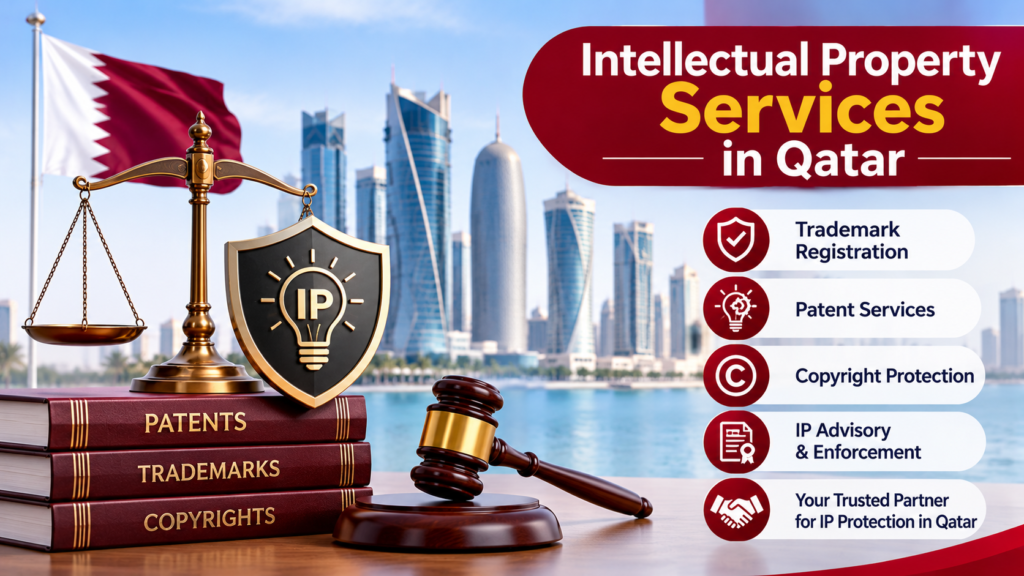
Your brand name, logo, software, product designs, and written content are business assets. In many companies, they are worth more than the equipment and stock on the balance sheet.
Yet many Qatar businesses leave these assets unprotected until a competitor copies them or an investor asks for proof of ownership. By then, fixing the problem is slower and more expensive.
This guide explains what intellectual property (IP) services in Qatar include, which types of protection exist, how the process works, and how to choose the right support.
What Is Intellectual Property?
Intellectual property is a creation of the mind that the law recognises and protects. In practice, it covers your brand identity, inventions, designs, and creative works.
Protection gives you the legal right to stop others from copying or using your work without permission. It also gives you something you can license, sell, or use as security when raising funds.
Types of Intellectual Property
Trademarks
A trademark protects the name, logo, slogan, or sign that identifies your goods or services. This is the most common IP right for businesses and usually the first one to secure.
Patents
A patent protects a new invention, such as a product, process, or technical solution. It generally requires that the invention is new, involves an inventive step, and has industrial use.
Industrial Designs
These protect the visual appearance of a product, such as its shape, pattern, or ornamentation.
Copyright
Copyright protects original creative works, including written content, software code, music, artwork, photography, and video. In many systems, copyright arises automatically on creation, though registration or documented evidence can make enforcement easier.
Trade Secrets and Confidential Information
Recipes, client lists, pricing models, and internal processes may not be registrable, but they can be protected through confidentiality agreements and internal controls.
Domain Names and Digital Assets
Your domain name and social media handles are part of your brand. Securing them early prevents impersonation and disputes.
What Do IP Services in Qatar Typically Include?
A good IP service provider supports you across the full life of your assets.
- IP audit and strategy. Reviewing what you own, what is unprotected, and what should be prioritised based on your budget and plans.
- Availability and conflict searches. Checking whether your proposed name or logo conflicts with existing registrations before you invest in it.
- Filing and registration. Preparing and submitting applications, choosing the correct classes for your goods and services, and responding to examiner queries.
- Monitoring. Watching new filings and the market for similar marks or copying.
- Renewals and portfolio management. Tracking deadlines so protection doesn’t lapse by accident.
- Contracts and licensing. Drafting confidentiality agreements, IP assignment clauses for employees and contractors, and licensing or franchise terms.
- Enforcement support. Sending cease-and-desist letters, handling oppositions, and coordinating with lawyers if a dispute goes further.
- International protection. Planning filings in other countries if you export or expand beyond Qatar.
Note that formal legal representation in court or before certain authorities may need a licensed lawyer or registered agent. Good providers are clear about which tasks they handle and which they refer.
Why IP Protection Matters for Qatar Businesses
It protects your brand investment. Marketing spend builds recognition. Registration helps ensure someone else can’t benefit from it.
It gives you legal leverage. A registered right is much easier to enforce than an informal claim of prior use.
It increases business value. Investors, buyers, and franchise partners look for documented ownership of key assets.
It prevents costly rebranding. Discovering a conflict after launch can mean new signage, packaging, and marketing.
It supports growth models. Licensing, franchising, and partnerships all depend on clear IP ownership.
It builds trust. Customers and partners take a business with protected assets more seriously.
How IP Registration Works in Qatar
Qatar’s IP framework is administered by government authorities, and procedures can be updated, so confirm current requirements before filing. The general path looks like this:
Step 1: Search. Check existing registrations for identical or similar marks, names, or designs.
Step 2: Prepare the application. Gather applicant details, a clear representation of the mark or design, and the list of goods or services it will cover.
Step 3: File. Submit to the competent authority, directly or through an authorised representative.
Step 4: Examination. The authority reviews the application for formal compliance and possible conflicts.
Step 5: Publication and opposition period. Approved applications are typically published so third parties can object.
Step 6: Registration. Once any objections are resolved and fees are paid, you receive your certificate.
Step 7: Maintain. Renew on time and keep using the mark in commerce.
Timelines depend on the type of right, the authority’s workload, and whether objections arise. Filing early and choosing a distinctive name both help.
Common IP Mistakes
Registering late. Waiting until you’re successful invites copycats and conflicts.
Skipping the search. Applications for similar marks can be refused, wasting time and fees.
Protecting only the name. Your logo, slogan, and product names may also need protection.
Choosing the wrong classes. A mark protects only the goods and services listed. Narrow filing leaves gaps.
No IP clauses in staff and freelancer contracts. Without clear assignment terms, a contractor may claim rights over work you paid for.
Missing renewal dates. Lapsed registrations can leave your brand exposed.
Assuming company registration protects your brand. Registering a company name with the commercial authorities is not the same as registering a trademark.
How to Choose an IP Service Provider in Qatar
Clarity on scope. Ask exactly what’s included: search, filing, responses to objections, renewals, and monitoring.
Local knowledge. Qatar-specific procedures, Arabic documentation requirements, and authority practices matter.
Honesty about limits. They should tell you when a lawyer or registered agent is needed.
Transparent fees. Separate government fees from professional fees, and ask what happens if an objection arises.
Responsiveness. IP deadlines are strict. You need a provider who tracks them.
Confidentiality. You may be sharing unreleased names, designs, or inventions. Ask how that information is protected.
Quick IP Checklist for Business Owners
- Search before you commit to a business or product name
- Register your key trademark in the classes that match your business
- Secure your domain name and social media handles
- Put confidentiality and IP assignment clauses in employee and contractor contracts
- Keep dated records of designs, drafts, and creation of original works
- Set calendar reminders for renewals
- Review your IP position before fundraising, franchising, or expanding abroad
Frequently Asked Questions
What are intellectual property services?
They are professional services that help you identify, register, manage, and defend your IP, such as trademarks, patents, designs, and copyrights.
Is registering my company the same as registering a trademark?
No. Company registration creates your legal entity. Trademark registration protects your brand identity in the market.
Which IP right should I register first?
For most businesses, the trademark for the brand name and logo, since it protects your customer-facing identity.
Can I protect my IP outside Qatar?
Yes, but protection is generally territorial. You’ll need to file in each country or use an international system where available. Check which options apply to you.
How long does registration take?
It varies by right and authority. Trademarks usually take several months, and patents typically take longer.
What if someone copies my brand?
Gather evidence, review your registrations, and get professional advice. Options range from a formal demand letter to opposition or legal action.
Final Thoughts
Intellectual property is one of the few business assets that can grow in value while costing little to protect. Acting early is almost always cheaper than fixing a dispute later.
At TBC Business Consultants, we help businesses across Qatar review their brand and IP position, coordinate registrations, and put the right contracts and processes in place. If you’re not sure what to protect first, we’re happy to start with a short conversation.



Leave A Comment