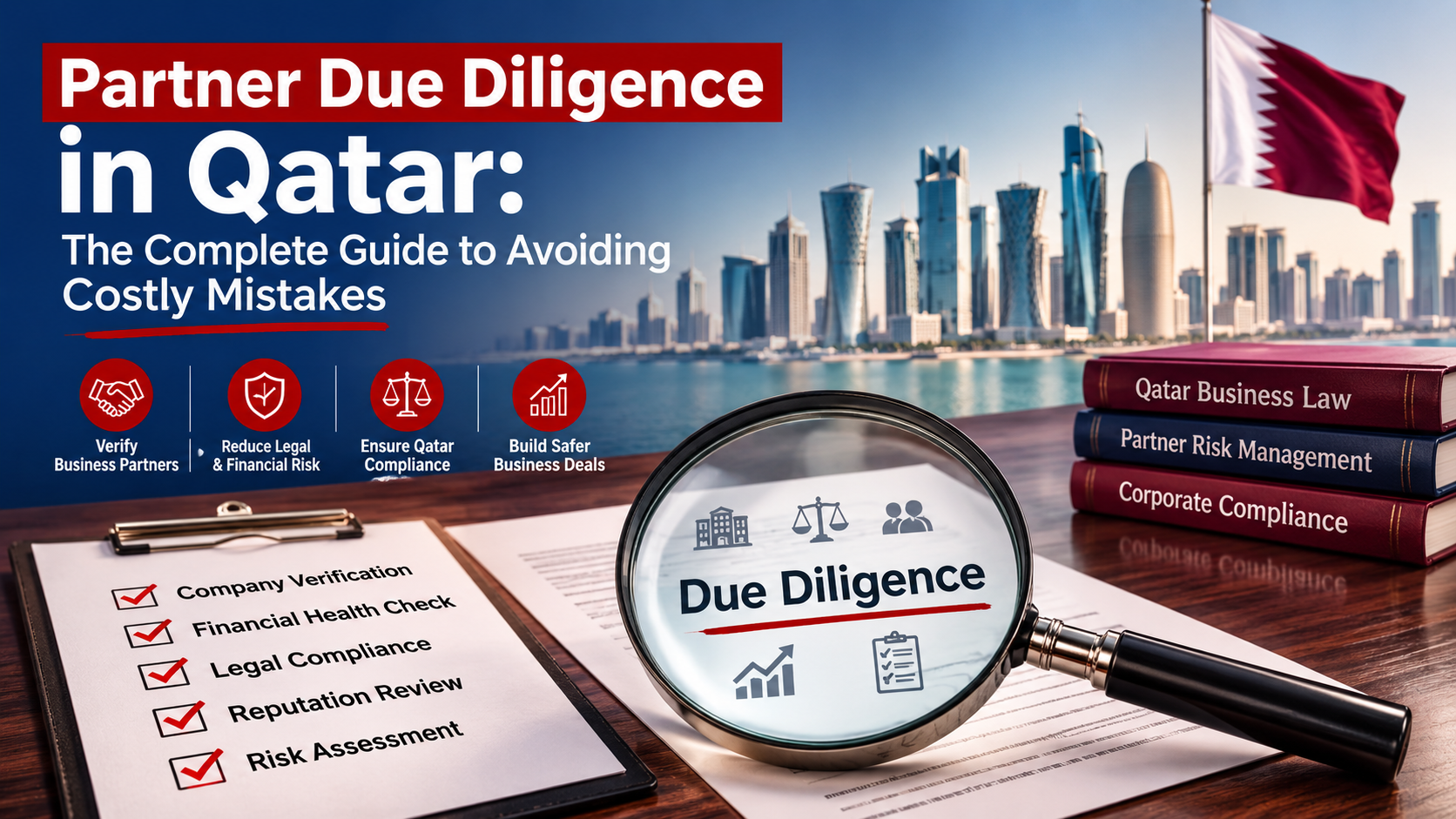
You found a promising business opportunity in Qatar.
An existing company wants you to join as a partner. The business looks solid. The numbers seem good. The owners seem trustworthy. It feels like the right move.
Then you sign the partnership agreement. You transfer your money. And suddenly you discover things the existing partners never mentioned:
- QAR 500,000 in outstanding supplier debts
- Unpaid employee liabilities totaling QAR 300,000
- Pending legal cases that could cost QAR 200,000
- Tax disputes with the General Tax Authority
- Personal guarantees given by existing partners that now apply to you
Your “profitable” company isn’t actually profitable. You’ve just inherited someone else’s problems.
At TBC QA, we’ve seen this pattern repeat dozens of times. We’ve worked with investors who did proper due diligence and found hidden liabilities before committing. We’ve also worked with investors who skipped this step and paid the price.
The difference between these two groups? One conducted thorough partner due diligence. The other didn’t.
Here’s what you absolutely need to do before joining any company as a partner in Qatar.
Why Partner Due Diligence Matters (More Than You Think)
Most people think due diligence is just checking if a company is profitable.
That’s dangerously wrong.
A company can show QAR 2 million in annual revenue and actually be losing money when you account for:
- Unpaid supplier debts
- Employee end-of-service liabilities
- Outstanding bank loans
- Pending legal cases
- Tax disputes
- Lease obligations
- Guarantees given by existing partners
When you become a partner, you don’t just inherit the profits. You inherit all the liabilities too.
This isn’t theoretical risk. In Qatar, partners are jointly and severally liable for company debts. If the company owes money and can’t pay, creditors can go after you personally.
That’s why proper due diligence isn’t optional. It’s essential.
Step 1: Start With the Company’s Official Commercial Registration
The first step is getting the company’s official records from Qatar’s government.
What to ask for:
- Commercial Registration (CR) copy
- Commercial Permit / trade license
- Articles of Association (MoA)
- Current list of partners and ownership percentages
- Authorized signatory details
- All registered business activities
- CR number and expiry date
Why this matters:
The Commercial Registration is the official government record of the company. Everything else flows from this. If something is missing from the CR, it’s not official.
Qatar’s Single Window portal allows you to verify CR information directly. You don’t have to trust what the existing partners tell you—you can check independently.
Red flags:
- Partnership percentages don’t add up to 100%
- Business activities don’t match what the company actually does
- CR shows different partners than the ones you’re discussing
- CR is expired or about to expire
- Authorized signatories are people you haven’t met
If any of these flags appear, stop and investigate before moving forward.
Step 2: Review the Company’s Financial Position Thoroughly
This is the most important step. And most investors skip it or do it superficially.
Ask for at least 3 years of:
- Audited financial statements
- Balance sheet
- Profit & loss statements
- Bank statements
- Accounts receivable (customer debts)
- Accounts payable (supplier debts)
- List of outstanding loans
- Credit facilities and overdrafts
- Cash position
- Fixed assets (equipment, vehicles, property)
- Inventory
What you’re actually looking for:
Don’t look at revenue. Look at net profit. Don’t look at assets. Look at liabilities. Don’t accept the story. Look at the numbers.
Specifically, calculate:
Working capital: Current assets minus current liabilities. Is there enough cash to run the business day-to-day?
Debt-to-equity ratio: Total liabilities divided by total equity. How much debt vs. actual value?
Cash flow: Not just profit. Actual cash position. Companies go bankrupt with positive profit if they run out of cash.
Hidden liabilities: Look for loans, credit facilities, overdrafts. These reduce actual profitability.
Receivables aging: How old are customer debts? If customers owe QAR 500,000 but haven’t paid in 6+ months, that’s not real revenue.
What about audited financials?
Qatar’s General Tax Authority requires foreign partners’ tax returns to be supported by audited financial statements from a licensed auditor. This means legitimate companies should have audited accounts.
If the company refuses to provide audited financials and says they don’t have them—that’s a major red flag.
Step 3: Verify Tax Compliance and Liabilities
This is where many companies hide problems.
Ask for:
- Latest tax returns
- Tax registration information
- Tax Clearance Certificate
- Evidence of no outstanding tax liabilities
- Details of any ongoing tax disputes
The Tax Clearance Certificate is critical. This is an official document from Qatar’s General Tax Authority confirming the company has no outstanding financial obligations. If they can’t provide this, there’s a tax problem.
Why tax matters:
Tax liabilities don’t disappear when you become a partner. They transfer to you. If the company owes QAR 200,000 in unpaid taxes and penalties, you now owe that too.
Qatar’s tax authority actively audits companies. If they find discrepancies, they assess penalties. These penalties become your liability as a new partner.
Red flags:
- No Tax Clearance Certificate available
- Tax returns show losses when the company claims profitability
- Discrepancies between reported revenue and tax-declared revenue
- Ongoing disputes with the General Tax Authority
- Penalties or assessments mentioned in tax correspondence
Step 4: Have a Lawyer Investigate Legal Liabilities
Don’t do this yourself. Hire an independent Qatar lawyer.
Important: Use a lawyer recommended by your professional network, not by the existing partners. You need independent legal advice.
Your lawyer should investigate:
- Court cases involving the company
- Execution cases (wage disputes, debt collection)
- Claims against the company
- Labour disputes
- Supplier disputes
- Bank liabilities and guarantees
- Cheques or security cheques
- Government penalties
- Lease disputes
- Contractual obligations
Why this matters:
A company might be profitable today but have pending legal cases that will cost QAR 500,000 when resolved. These don’t show up in profit statements. They show up in court records.
Personal guarantees are particularly important. If existing partners have given personal guarantees on company loans, those guarantees might transfer to you when you become a partner. You could become personally liable for millions.
What your lawyer will find:
- Actual, verified liabilities (not hearsay)
- Contingent liabilities (possible future claims)
- Legal risks you didn’t know existed
- Contractual obligations that bind the company
- Employee disputes that might trigger claims
This costs QAR 3,000-7,000 but could save you hundreds of thousands in hidden liabilities.
Step 5: Check Employee and Labour Obligations
A profitable-looking company can have massive hidden employee liabilities.
Ask for:
- Total number of employees
- Current salary records
- Outstanding salaries (any employees not fully paid?)
- End-of-service liabilities (total amount owed to employees who leave)
- WPS (Wage Protection System) compliance records
- Pending labour cases
- Employee-related claims
- Visa and residency obligations
Why this is critical:
Qatar has strict labour laws. Companies must pay end-of-service benefits when employees leave. This obligation accrues over time and can be substantial.
For example, a company with 20 employees earning average QAR 5,000/month might have accumulated end-of-service liabilities of QAR 500,000+.
When you become a partner, you inherit this liability.
WPS compliance matters too. If the company hasn’t been properly recording payroll in the WPS system, the Ministry of Labour can assess penalties. These penalties become your liability.
Red flags:
- Employees not fully listed in WPS
- Salary delays or arrears
- High employee turnover (suggesting labour issues)
- Ongoing disputes with Ministry of Labour
- Employees taking unpaid leave (often indicates financial problems)
Step 6: Review Contracts, Leases, and Assets
Everything the company owns and owes is part of what you’re inheriting.
Review:
- Office or shop lease agreement (is it transferable? What are the renewal terms?)
- Major customer contracts (how long are they binding?)
- Supplier agreements
- Franchise agreements (if any)
- Vehicle ownership (does the company own or lease?)
- Equipment and fixtures
- Inventory (is it actual inventory or just on paper?)
- Intellectual property/trademarks
- Website and social media accounts
- Software subscriptions
- Deposits or advances paid to others
Verify that assets actually exist. We’ve seen companies show QAR 300,000 in “equipment” that doesn’t physically exist. They’re just accounting entries.
Lease agreements are particularly important. If the office lease is expiring in 6 months and landlord won’t renew, your business location disappears. If the lease requires personal guarantees, you become liable for rent even if the company fails.
Step 7: Investigate Existing Partners Carefully
Never trust what existing partners tell you about ownership.
Verify independently:
- Who actually owns what percentage?
- Are there side agreements between partners?
- Are there nominee arrangements (one person owning on behalf of another)?
- Are there loans between partners?
- Are there undisclosed ownership arrangements?
Why this matters:
Partners might tell you “Partner A owns 51%, Partner B owns 49%.” But there could be hidden agreements where Partner B actually controls the company despite owning minority shares.
Or there could be loans from partners to the company that aren’t disclosed, reducing actual equity.
MOCI confirms that partner changes must be properly registered in the Commercial Register. Don’t rely on private agreements. Make sure any partnership structure is officially registered.
How to verify:
- Get the official CR showing current partners and percentages
- Review Articles of Association for any special agreements
- Have your lawyer search for any side agreements
- Ask for bank records showing any partner-to-company transactions
- Ask for loan agreements between partners and company
Step 8: Confirm Your Proposed Ownership Is Legally Permitted
Before you commit, verify your ownership structure is actually legal.
This is critical if you’re a foreign investor.
Foreign ownership rules vary by business activity:
For most commercial activities: Foreign investors can own up to 49% without special approval (with Qatari partner owning 51%+).
For certain exempted activities: Foreign investors can own up to 100% with proper approval from the Ministry of Commerce and Industry.
These activities include:
- Technology and IT services
- Healthcare and pharmaceutical manufacturing
- Educational services
- Tourism and hospitality development
- Manufacturing in designated industrial zones
- Oil and gas services
The critical point: Check the exact activity written on the Commercial Registration, not just what the company tells you it does.
If the CR says “General Trading” but you want to operate a “Software Development” company, you need to amend the CR. This requires new approvals and might change your ownership rights.
Red flags:
- Ownership structure exceeds what’s legally permitted
- Existing partners asking you to use a nominee arrangement (illegal in most cases)
- Unclear explanation of why your proposed ownership is permitted
- Mention of side agreements that circumvent ownership restrictions
The 15-Document Partner Due Diligence Checklist
Before you sign anything, make sure you have these 15 documents:
- ☐ Current Commercial Registration
- ☐ Commercial Permit/Trade License
- ☐ Articles of Association (company bylaws)
- ☐ Current partner/shareholding details
- ☐ Last 3 years’ audited financial statements
- ☐ Last 3 years’ tax returns
- ☐ Tax Clearance Certificate
- ☐ Last 12 months’ bank statements
- ☐ List of all loans/financing
- ☐ List of outstanding debts/payables
- ☐ List of receivables/customer debts
- ☐ Employee/WPS liabilities summary
- ☐ Major contracts and lease agreements
- ☐ Details of pending legal cases/claims
- ☐ Written confirmation of all liabilities and guarantees
If the existing partners refuse to provide any of these documents, that’s your answer. Don’t proceed.
Common Mistakes Investors Make
Mistake #1: Trusting the Owners’ Word
Most investors believe what existing partners tell them. “The company is profitable.” “There are no legal issues.” “Employees are all happy.”
Reality: Owners have incentive to hide problems. Don’t trust their word. Verify everything independently.
Mistake #2: Only Looking at Revenue
Revenue tells you nothing. QAR 5 million in revenue means nothing if the company has QAR 4 million in expenses and QAR 2 million in liabilities.
Look at net profit. Look at liabilities. Look at cash position.
Mistake #3: Not Using Independent Professionals
Investors use lawyers or accountants recommended by the existing partners. Of course they find nothing wrong—they work for the people they’re supposed to investigate.
Use independent professionals from your own network.
Mistake #4: Skipping the Legal Investigation
Investors think legal due diligence is expensive and unnecessary. Then they discover pending lawsuits that cost hundreds of thousands.
The legal investigation is the most important part.
Mistake #5: Assuming Personal Guarantees Won’t Apply to Them
Existing partners have given personal guarantees on company loans. New investors think “that doesn’t apply to me.”
Wrong. Many partnership agreements make guarantees bind all partners, including new ones.
Mistake #6: Not Understanding End-of-Service Liabilities
Investors look at the balance sheet and miss the massive accumulated end-of-service liability sitting as a contingent liability.
When you become a partner, this becomes your problem.
Timeline: How Long Does Due Diligence Take?
Proper partner due diligence takes time. Don’t rush it.
Realistic timeline:
- Week 1: Collect documents and initial review
- Week 2-3: Financial analysis and accounting review
- Week 3-4: Legal investigation (lawyer needs time for court searches, etc.)
- Week 4-5: Follow-up questions and clarifications
- Week 5-6: Decision
Minimum time: 4-6 weeks
If someone is pressuring you to decide in less time, that’s a red flag. Legitimate businesses understand the need for due diligence.
What If You Find Problems?
You’ve done due diligence and discovered liabilities. Now what?
Option 1: Renegotiate
If liabilities are significant, your investment valuation changes. You should pay less, or existing partners should cover the liabilities before you join.
Option 2: Request Liability Allocation
Existing partners assume responsibility for pre-acquisition liabilities. You only take on liabilities accruing after you join.
Option 3: Walk Away
If the liabilities are too large or too risky, walking away is the right decision.
The cost of due diligence (QAR 10,000-20,000) is tiny compared to inheriting hundreds of thousands in liabilities.
How TBC QA Helps With Partner Due Diligence
At TBC QA, we’ve helped dozens of investors evaluate partnership opportunities in Qatar.
What we do:
- Financial analysis: Review audited statements, tax returns, bank records. Calculate working capital, debt-to-equity, cash flow. Identify hidden liabilities.
- Legal coordination: Work with qualified Qatar lawyers to investigate court cases, execution cases, claims, and disputes.
- Compliance verification: Check tax status, Labour Ministry compliance, Commercial Registry accuracy.
- Risk assessment: Identify what you’re actually inheriting and what risks you’re taking on.
- Recommendation: Clear guidance on whether the partnership makes financial sense.
What this costs:
Full due diligence engagement typically costs QAR 10,000-20,000 depending on company size and complexity.
What you get:
Peace of mind. Clear understanding of actual financial position. Documented risks. Professional recommendation on whether to proceed.
Before You Sign Anything
Ask yourself:
 Do I have 3 years of audited financial statements?
Do I have a Tax Clearance Certificate?
Have I had independent legal investigation?
Do I understand all employee liabilities?
Have I verified all contracts and leases?
Do I know what existing partners actually own?
Is my proposed ownership legally permitted?
Do I understand all outstanding debts and liabilities?
If you answered no to any of these, don’t sign.
Ready for Professional Due Diligence?
Joining an existing company as a partner is a major financial commitment. Don’t do it blindly.
[Schedule your partner due diligence consultation →]
We’ll review the documents, identify risks, and give you clear guidance on whether this partnership makes sense financially.
KEY TAKEAWAYS:
Partner due diligence is essential—not optional
Start with official Commercial Registration
Review 3 years of audited financial statements
Verify tax compliance with Tax Clearance Certificate
Have independent lawyer investigate legal liabilities
Check employee and end-of-service liabilities
Verify all contracts, leases, and assets actually exist
Investigate existing partners for hidden arrangements
Confirm your ownership structure is legally permitted
Use the 15-document checklist before signing
Expect the process to take 4-6 weeks minimum


Leave A Comment